
What 35,000 Square Kilometres Can Teach Us
In the 1990s, China's Loess Plateau was the most eroded place on Earth. What happened next is one of the most documented and significant acts of ecological recovery ever recorded — and its lessons apply far beyond China's borders.
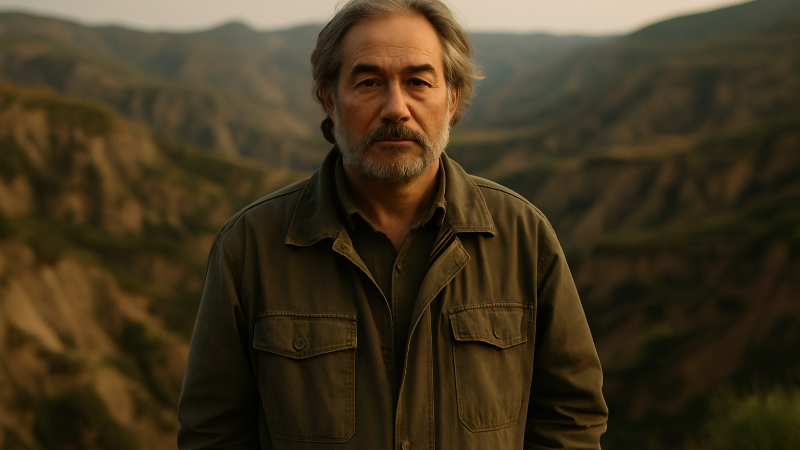
When John Liu arrived on China's Loess Plateau in 1995 to begin documenting a restoration project, what he found was a landscape in near-total ecological collapse. Enormous gullies ran thick with eroded sediment during the rains. Vegetation cover in some areas had fallen to 10 per cent. The hydrology of the region had been so thoroughly disrupted that 95 per cent of rainfall was being lost immediately as runoff, carrying topsoil into the Yellow River rather than infiltrating into the ground. An area approximately the size of France had been brought, over ten millennia of continuous human settlement, to the edge of irreversibility.
The Loess Plateau has one of the longest agricultural histories in the world. The Han civilisation that emerged along the Yellow River shaped the culture of the world's most populous nation, and the plateau was its heartland. But as that civilisation grew, so did the pressure on the land. Forests were cleared, hillsides cultivated, and eventually unrestricted herding of goats and sheep pulled grass out by the root across an already-fragile soil. By the time the restoration project launched in the mid-1990s, the land was supporting millions of people in chronic poverty while simultaneously producing 1.6 billion tons of sediment a year that clogged the river downstream and contributed to the cycle of flooding, drought and famine that had come to be known as China's Sorrow.
The Loess Plateau Watershed Rehabilitation Project was not a conventional conservation effort. Over roughly a decade, it directed approximately $500 million across an active project area of 35,000 square kilometres, involving entire communities as the central agents of change. Slopes steeper than 25 degrees were designated off-limits for cultivation and returned to natural regeneration. Free-ranging of goats and sheep was banned. Farmers received long-term land use contracts — a policy that gave communities direct economic stake in the restoration's success. They were paid to build terraces, plant trees and implement new agricultural methods. The logic was straightforward: the same people whose practices had contributed to the degradation became, through carefully designed incentives, the solution.
What came back is documented in Liu's film, The Lessons of the Loess Plateau, and the outcomes are as striking as the scale. Vegetation cover returned across hillsides that had been bare for generations. Biodiversity followed — plant and animal species reappeared in numbers that had been absent from the landscape for centuries. The restored root systems and accumulating organic matter stabilised the soil, altered evaporation rates and began to rebuild the hydrological cycle the region had lost. Incomes rose. Zhang Fang, a farmer in the village of Hojago, had lived below the poverty line for most of her adult life on a few hundred yuan a year; within the project's lifetime, she had earned enough to build a house with electricity and running water.
The significance of the Loess Plateau goes beyond its borders not because the method is transferable as a blueprint but because the principle is. Degraded land can be restored when communities are brought into the process with genuine ownership, when land rights are secured, and when the natural systems given the right conditions are allowed to do the work. The plateau receives on average between 250 and 800 millimetres of rainfall per year — sufficient at the low end for grassland and at the upper end for forest. The land was never truly dead. It had been suppressed. Removing the pressure was not enough; the community had to actively take part in rebuilding what had been lost. That distinction matters, and it is the lesson the Loess Plateau keeps teaching.
Stream The Lessons of the Loess Plateau and support the work of our conservation partners at https://watch.ecoflix.com/programs/the-lessons-of-the-loess-plateau-john-liu
First published in the Ecoflix newsroom.
More in Conservation
Why Nature Is Now a Climate Strategy
This week marks World Environment Day 2026, themed Inspired by Nature. Behind the slogan is a growing body of evidence that restored ecosystems are among the most powerful climate tools available — and some of the least used.
Read feature
The Activists Holding Ocean Destroyers to Account
From Grenada's reefs to the killing bays of the Faroe Islands, the front line of ocean protection is held by a small number of organisations willing to go where others do not. What they find there is both troubling and clarifying.
Read feature
How Darkness Became a Conservation Tool
The science behind seabird rescue is more intricate than it looks from the street. From acoustic monitoring to GPS-tracked releases and tunable LED systems dimmed after midnight, the field methodology is reshaping how conservationists think about light, time and the design of coastal towns.
Read feature