
Most Marine Protected Areas Exist Only on Paper
On World Oceans Day, the gap that matters most is not between healthy seas and degraded ones — it is between the protections governments have announced and the ones that actually function. The 30x30 target is closer than it looks, and further away than the numbers suggest.
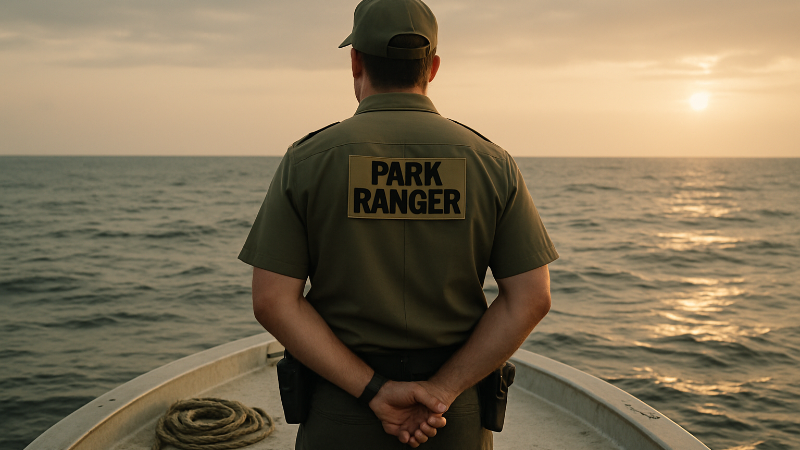
Roughly 8.2 per cent of the world's ocean surface now falls inside some form of marine protected area. That figure has more than doubled in the past decade, driven by international pledges, the momentum of the 30x30 campaign and, most recently, the hard-won progress of the High Seas Treaty. On World Oceans Day, it sounds like cause for genuine optimism.
The problem is that the number is largely a cartographic achievement. Drawing a boundary on a map and declaring an MPA is one thing. Patrolling that boundary, enforcing it against illegal fishing fleets, funding the rangers and vessels that make protection real — those are entirely different undertakings. The Marine Conservation Institute estimates that less than 3 per cent of the ocean is fully or highly protected, meaning the areas where fishing, extraction and damaging activity are genuinely prohibited and monitored. The rest exists, in varying degrees, on paper.
This distinction matters enormously for ocean recovery. A reef inside a well-enforced MPA behaves differently from a reef inside a nominal one. Fish populations rebuild. Apex predators return. The structural complexity that supports hundreds of species — what one researcher in coastal Panama describes as the coral reef equivalent of a New York City skyline, every tunnel and ledge holding a different life — has a chance to re-establish. Without enforcement, that trajectory reverses, often faster than it was built.
The 30x30 campaign aims for 30 per cent of land and ocean under effective protection by 2030. The word effective is doing significant work in that sentence. Meeting the target in name, by protecting 30 per cent of seas that are biologically low-value or geographically inaccessible, would not deliver what the science says is necessary to halt biodiversity decline and support ocean system resilience. The areas that most need protecting — shallow coastal reefs, seamounts, migratory corridors — are also the areas where fishing pressure is greatest and enforcement most costly.
The High Seas Treaty, formally the Agreement on Marine Biodiversity of Areas Beyond National Jurisdiction, opened for signature in 2023 and represents the most significant development in ocean governance in decades. It creates a legal framework for establishing MPAs in international waters — roughly half the planet — that were previously a regulatory vacuum. Ratification is still progressing. The treaty is a foundation, not a solution.
What the evidence from functioning MPAs shows is that the model works when it is applied seriously. Reefs that have been genuinely rested from extraction recover faster than most projections suggested. Fishing communities adjacent to well-managed no-take zones frequently report higher long-run catches from the spillover effect. The argument for strong marine protection is not idealism. It is documented return on investment, measured in tonnes of fish and metres of living reef.
Join the Ecoflix community and watch Great Barrier Reef - Jenna Rumney at https://watch.ecoflix.com/programs/great-barrier-reef-jenna-rumney
First published in the Ecoflix newsroom.
More in Oceans

Why Humpback Whale Migration Tests Our Relationship With the Sea
Each winter, humpback whales travel from Alaska to Hawai‘i, following one of the Pacific’s most important migration routes. Ocean Guardians explores what that journey reveals about marine conservation and the continuing challenge of living
Read feature
The Land That Came Back to Life
On World Environment Day 2026, the most powerful argument for nature-based climate action is not a projection or a policy paper. It is the evidence of what communities have already done — on three continents, with their own hands and their own land.
Read feature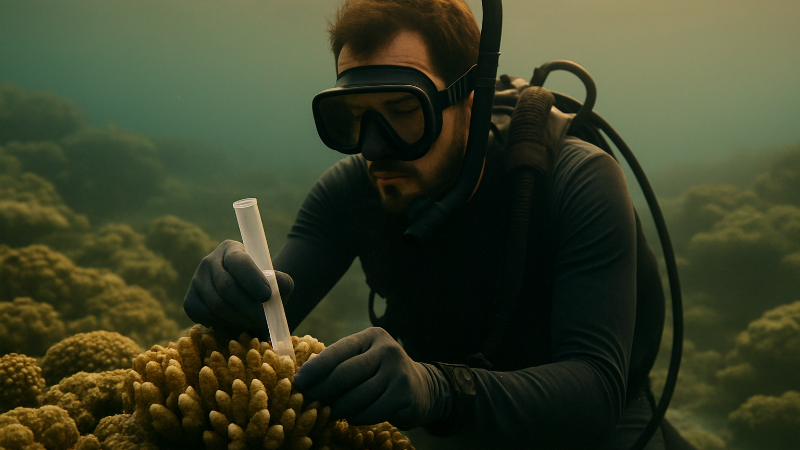
What Super Corals Reveal About Reef Recovery
In the tropical eastern Pacific, a team of scientists is sampling the same corals twice a year, chasing a question that could reshape how the world thinks about ocean restoration. Some reefs are fighting back — and the science of why is finally catching up.
Read feature