
What SARS Still Has to Tell Us About the Wildlife Trade
Palm civets were implicated in the 2002 SARS outbreak. Two decades on, the science linking their exploitation to zoonotic disease risk has never been clearer.

In the winter of 2002, health workers in Guangdong province began seeing patients with a severe and unfamiliar respiratory illness. What followed became the first major infectious disease crisis of the twenty-first century: SARS spread to 29 countries, killed nearly 800 people and triggered one of the most intensive outbreak investigations in modern epidemiological history.
When researchers traced the virus to its likely animal origin, they found Himalayan palm civets at the wildlife markets of Shenzhen carrying a near-identical strain. The discovery placed Viverridae, a family of small carnivores barely registered in mainstream conservation science, at the centre of a global public health debate that has not yet reached a conclusion.
Subsequent research has refined that picture significantly. Civets at those markets were not the reservoir species for SARS-CoV; current evidence points to horseshoe bats as the primary source. What the civets represented was an intermediate host: animals that acquired the virus through close contact in captivity and amplified it in conditions that enabled human exposure.
This distinction matters. The risk was not an inherent property of civets as a species but a product of the specific conditions in which they were being held. Crowded, stressed and immunocompromised animals kept in close proximity to one another and to people generate exactly the spillover conditions that epidemiologists have since documented as high-risk, repeatedly and across different taxa.
One Health, as a framework formalised by the World Health Organization and its partners in the years since SARS, makes this connection explicit. The framework holds that human health, animal health and environmental health are not separate policy domains but interdependent systems, and that effective disease prevention therefore requires interventions at all three levels simultaneously. For civets, the practical implication is direct: the conditions sustained by the kopi luwak trade and the wider wildlife market create exactly the kind of high-risk interface that One Health science identifies as a documented spillover pathway. Addressing civet exploitation is not only an animal welfare question. It is, the science argues consistently, a population health question.
The Civet Project’s One Health programme is built on this understanding. Working across Vietnam and the wider Mekong region, its field teams conduct parallel operations rather than sequential ones: population surveys of wild civets, welfare assessments at captive-production facilities and community health protocols developed alongside the people living closest to the wildlife-trade risk. The research is producing data on civet population dynamics that did not previously exist at this resolution, alongside a community-engagement model that builds informed consent and local capacity simultaneously rather than treating these as separate conservation and public health objectives. Civet Coffee: From Rare to Reckless follows the project’s researchers on location, capturing this methodology in practice and documenting the fieldwork that links species health to community safety in terms that scientific literature rarely conveys as clearly.
What makes the project’s approach scientifically distinctive is the insistence that the three research streams are not separable. Community health outcomes cannot be reliably improved without understanding civet population dynamics. Wildlife trade risk cannot be accurately mapped without welfare data from captive operations. Regulatory change cannot be argued for without peer-reviewed evidence that places the species in its full epidemiological context. This is what One Health means in practice when applied to a specific taxon: an integrative methodology, not a slogan. Among wildlife documentaries streaming on conservation-focused platforms, Civet Coffee: From Rare to Reckless is rare in following that integration into the field rather than summarising it from a distance.
The SARS outbreak is sometimes described as a warning that was imperfectly heard. What the Civet Project’s research suggests is that the conditions enabling that risk persist, that the science to address them is available and that the gap between evidence and policy response remains significant. The field data is there. The argument has been made. The question now is whether the institutions that matter will choose to act on it.
Join the Ecoflix community and watch Civet Coffee: From Rare to Reckless at watch.ecoflix.com
External Links
The Civet Project
World Health Organization One Health
EcoHealth Alliance
First published in the Ecoflix newsroom.
More in Science
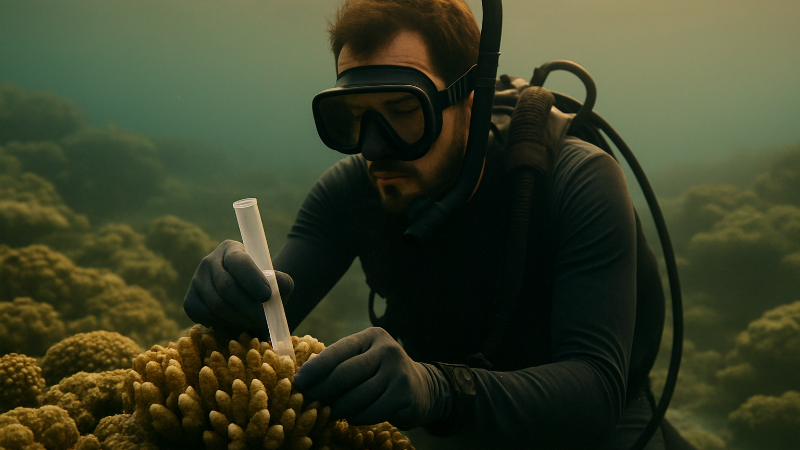
What Super Corals Reveal About Reef Recovery
In the tropical eastern Pacific, a team of scientists is sampling the same corals twice a year, chasing a question that could reshape how the world thinks about ocean restoration. Some reefs are fighting back — and the science of why is finally catching up.
Read feature
Inside the Citizen-Science Push to Heal the Hudson
For two decades, a single river-keeper organization has built one of the largest watershed-scale monitoring efforts in the United States. The data it generates has begun to change what river recovery looks like.
Read feature
Endangered Species Day is not just about endangered species
Ian Redmond explores how endangered gorillas influence forest regeneration, insect life, rainfall systems and carbon storage, showing why species loss affects ecosystems far beyond their immediate habitat.
Read feature